Table Of Content
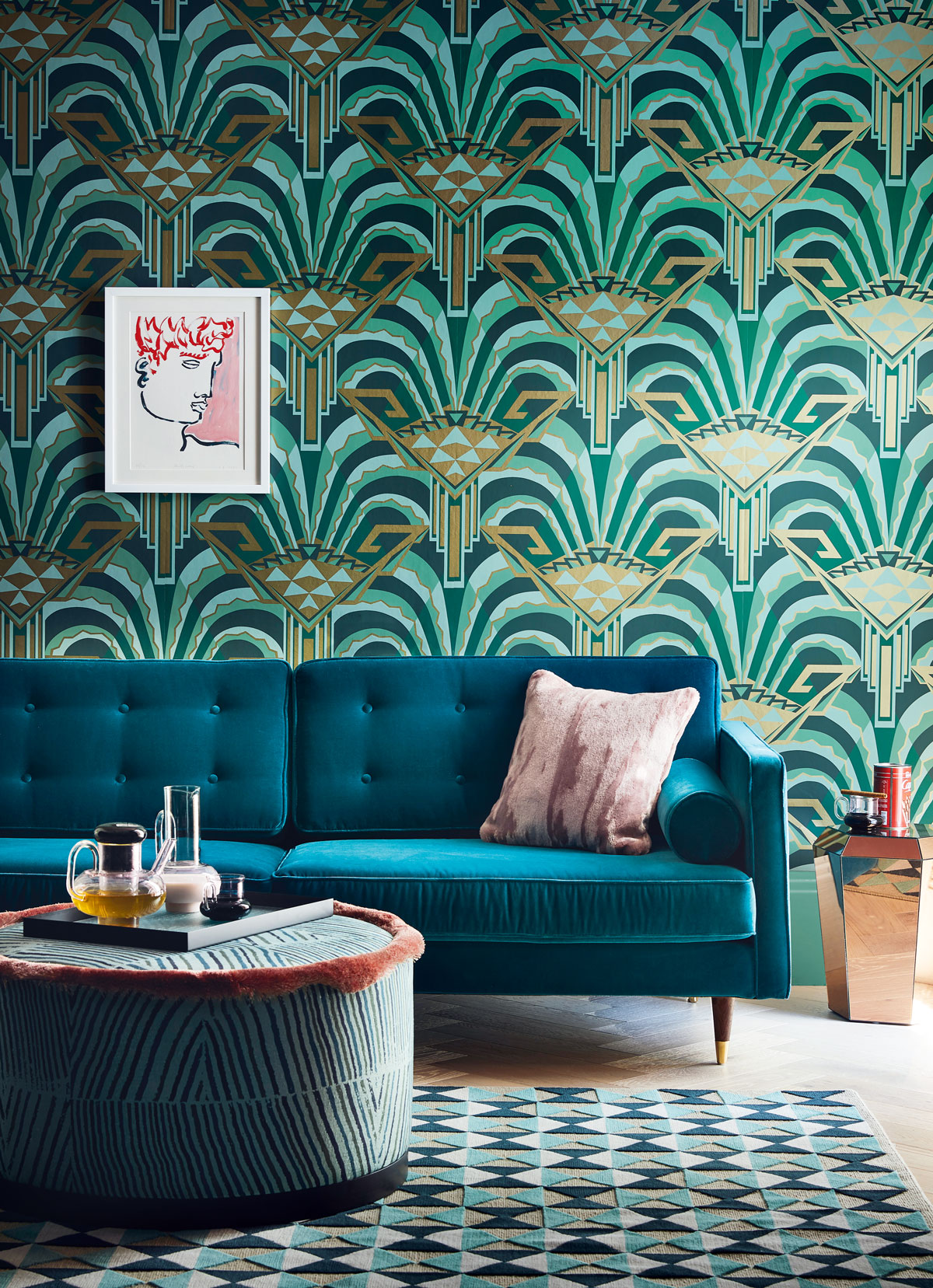
Art Deco is a popular design style of the 1920s and ’30s characterized especially by sleek geometric or stylized forms and by the use of man-made materials. Mirrors look great featured in an art deco style home and art deco style options can be found relatively inexpensively. Ornate mirrors make any room look polished and larger even, do make a statement with one. And do source art deco style prints and art for your walls, along with personal finds like vases and figurines for a finishing touch. Accessories complete an art deco room – small elements like fixtures and fittings will make a huge difference too. You can source great replica light fittings, door handles, switch panels, and all manner of furnishings online, which is great if you are on a budget and can’t splurge on genuine art deco period gems.
Eastern Columbia Building (Los Angeles, USA)
This navy wallpaper, paired with the navy chair and lamp, feels so expensive. If you prefer to keep things modern, you can still work in some '20s-inspired pieces for a final look that pops. This horizontally tufted headboard in a moss green feels modern with a hint of Art-Deco flair. We love this marble runner in this hallway—the pattern feels right out of the '20s, while the stone feels downright luxurious.

Ways to Master Art Deco Style Like Joanna Gaines
One can easily trace the movement worldwide right up until the Second World War. People observed the first sight of anything remotely art deco at the French exposition in Paris. There was a massive revolt against the traditional ornate designs that were more dominant and displayed. This sumptuous material originally was made of pure silk that gave it a plush texture; today, you can get the same effect with a real-life-friendly poly-blend velvet.
Rockefeller Center (New York City, USA)
During the art deco period, the most widely used colors ranged from bright yellows, red greens, blues, and pinks to pure black at times. Art deco first began to take shape in fashion, which influenced furniture designs and led to a sizeable architectural movement. Social and architectural movements went hand in glove in making art deco a considerable success. Wherever they were, high-end social gatherings, like the Waldorf Astoria in New York City, art deco became a part of the interior design and space planning.
What Are the 1920s Art Deco Architecture Characteristics?
Today, the Art Deco style is celebrated for its glamour, luxury, and symmetrical designs, and continues to influence contemporary design. Innovations such as the skyscraper and developments in new materials and building techniques deeply influenced Art Deco. Stainless steel, aluminum, lacquer, inlaid wood, and other materials came into vogue. Designers began to embrace the machine-age, which is evident in the repetitive geometric patterns and symmetrical forms common in Art Deco design. Art deco homewares refers to the knickknacks and nonessential accents that can provide the final layer for an art deco interior. Things like blankets, rugs, lamps, vases, cushions and even accent chairs are all popular choices for art deco homeware.

Frame windows with glamorous curtains in a gold-bronze silk blend, adding a real touch of luxury to any room. By following these tips, you can successfully incorporate the Art Deco interior design into your home. Leading the field in terms of ergonomics, this high-end office furniture from Buro is also designed with the evolving needs of the modern workplace in mind. This era was all about being extravagant, and make no mistake; the materials used live up to every bit of it. Stainless steel, chrome, glass, and mirror finishes were the need of the hour and were used without any restriction.
As such, the furniture you introduce to an Art Deco living room can make all the difference to the overall aesthetic. 'Art and sculpture pieces are another way we like to incorporate the Art Deco element in a living room. With a contemporary approach to a traditional design, this adds an element to the space that truly stands the test of time,' says Jessica. It drew from Art Nouveau's flowing lines and natural motifs, but also incorporated the abstract forms of Cubism, the machine-like shapes of the Bauhaus, and the influence of Fauvism and Orphism. The movement also looked to non-Western cultures for inspiration, particularly ancient Egyptian, African, and Aztec art.
Initially known as ‘Jazz Moderne’ or ‘le style moderne’, the term ‘Art Deco’ was coined only in 1968 through a scholarly appraisal of the design style. It gets its name from ‘Exposition Internationale des arts décoratifs et industriels modernes’ (International Exhibition of Modern Decorative and Industrial Arts), held in Paris in 1925. This pivotal event showcased the burgeoning design movement and provided a platform for its subsequent global dissemination.
An Irish home inspired by a London palace
The nondescript buildings and repeated townhouses just reminded them of drab day-to-day life. The art deco movement entered the design scene as a bi-product of love, beauty, opulence, and human desire to live in luxury. If you look closely, you can see that art deco houses resemble the homes and apartments of the rich and the famous in Hollywood from the early 20s. There's nothing more glamorous than a wet bar stocked with gleaming glassware. Pay tribute to the Prohibition Era's ritzy aesthetic with dark walls, rich stained cabinets, and gold-toned hardware.
Rittenhouse's All-Day Cafe Enswell Is an Art Deco Design Dream - Philadelphia magazine
Rittenhouse's All-Day Cafe Enswell Is an Art Deco Design Dream.
Posted: Wed, 06 Dec 2023 08:00:00 GMT [source]
As Art Nouveau faded away between 1910 and 1920, design forms returned to tradition, notably in the works of Paul Iribe. In 1912, André Vera wrote an editorial advocating for a return to earlier ages’ workmanship and materials, as well as a new repertory of natural shapes, such as baskets and fruit and flower garlands. Aaron Micu has built his 30-year career the way artisans of the old world became masters of their trade.
He hired architect Paul Sinoir to create a Cubist mansion for the land in 1931. He gradually acquired more property, increasing his stake by around 10 acres. San Francisco’s Medical and Dental Building was influenced by Mayan architecture in a strongly idealized form, with pyramid formations and heavily stylized rows of hieroglyphs covering the inside walls.
For a subtle nod, consider painting built-ins or furniture in these handsome hues providing the perfect backdrop for gold and brass accessories. To fully embrace the opulence of this design style, use these colors on all four walls for maximum glam,' she adds. As a homeowner or interior designer, you may feel the need to showcase how the space in question would look with your design ideas.
Thoughtfully select a few design pieces or a significant one to add a bit of Art Deco to any kind of space. It’s about letting the style complement the modern aesthetic, without using it in entirety. We asked interior designers to share the history of Art Deco design, its elements, and the ways all lovers of glamor and style can introduce it, and this is what they told us. Art Deco, also known as style moderne, was the major design style of the 1920s and 1930s. It's characterized by simple shapes, plenty of glamour and geometric decorations, and the use of metallics and jewel tones like jade, silver, and chrome. Art Deco blossomed into a leading trend in Europe and the U.S. in the 1920s and 1930s.
Since then, he received commissions to design theatre and ballet costumes, make illustrations for books and posters, and Haute couture fashion. For a long period, Barbier was an important member of an elite circle of french artists and designers of the period. Vogue nicknamed that group ‘The Knights of the Bracelet’, because of their fashionable and flamboyant style. A true multitalented creator, during his career, Barbier designed jewelry, wallpapers, and glass, made illustrations, and wrote essays for acclaimed and prestigious french magazines.




No comments:
Post a Comment